

Royal Maca Forte
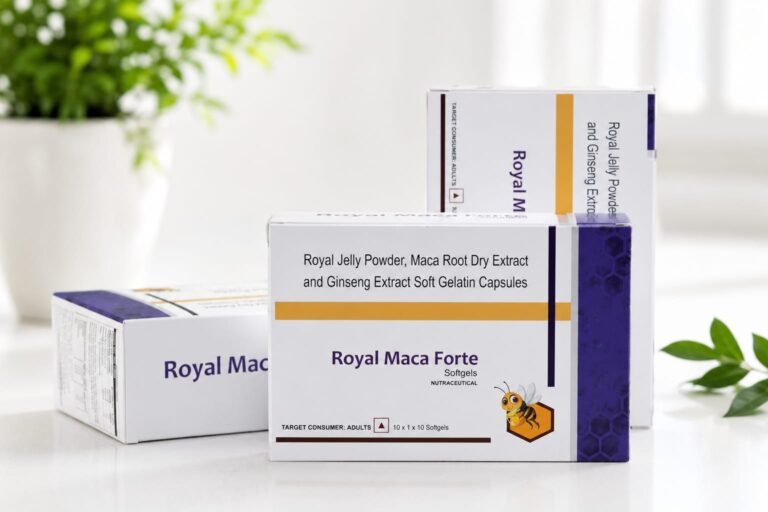
Royal Maca Forte Capsule – Product Overview
Royal Maca Forte Capsule is a nutritional wellness formulation combining Royal Jelly, Maca Root and Ginseng. These traditionally used ingredients are known for their nutritional properties and are commonly included in men’s wellness formulations focused on energy, stamina, vitality and overall well-being.
Maca Root is traditionally used as a source of nutritional support and is associated with vitality and physical endurance. Royal Jelly naturally contains proteins, amino acids, vitamins and other nutrients, while Ginseng has a long history of traditional use for supporting energy and vitality.
The combination of Royal Jelly + Maca Root + Ginseng provides a comprehensive nutritional approach to men’s wellness and daily vitality.
Benefits of Royal Maca Forte Capsule
- Supports Energy & Vitality – Helps support daily energy levels and overall vitality.
- Supports Physical Stamina – Maca and Ginseng are traditionally used to support endurance and physical performance.
- Supports Men’s Wellness – Formulated to provide nutritional support for overall men’s health and well-being.
- Supports Natural Vitality – A combination of Royal Jelly, Maca Root and Ginseng provides nutritional and botanical support.
- Helps Support Overall Well-Being – Royal Jelly provides naturally occurring nutrients, while Maca and Ginseng complement the formulation.
- Daily Nutritional Support – Suitable as part of a balanced diet and healthy lifestyle.
Ingredients & Nutrition Facts
| ngredient | Amount per Serving | % RDA Value |
|---|---|---|
| Royal Jelly Powder (10%) | 250 mg | ** |
| Maca Root Dry Extract | 200 mg | ** |
| Ginseng Extract (10%) | 50 mg | ** |
Nutritional Information — Approximate Values
| Nutrient | Per Serving | % RDA Value |
|---|---|---|
| Energy | 2.82 Kcal | 0.14 |
| Protein | 0.10 g | 0.19 |
| Carbohydrate | 0.24 g | ** |
| Fat | 0.16 g | 0.24 |
| Fiber | 0.01 g |
How Royal Maca Forte Capsule works
Royal Maca Forte Capsule combines Royal Jelly Powder, Maca Root Dry Extract and Ginseng Extract to provide nutritional and botanical support for energy, stamina, vitality and overall men’s wellness.
- Royal Jelly: Provides naturally occurring proteins, amino acids, vitamins and other nutrients that contribute to its nutritional profile.
- Maca Root: Traditionally used as a botanical ingredient to support vitality, stamina and physical endurance.
- Ginseng: Traditionally used as an adaptogenic herb and commonly included in wellness formulations aimed at supporting energy, vitality and physical performance.
Who should use Royal Maca Forte Capsule
Royal Maca Forte Capsule may be suitable for adult men looking for nutritional support for energy, stamina, vitality and overall men’s wellness. Its combination of Royal Jelly, Maca Root and Ginseng makes it appropriate for individuals seeking botanical and nutritional support as part of a healthy lifestyle.
It may be considered by:
- Adult men seeking daily nutritional support for energy and vitality.
- Men looking to support stamina and physical endurance through a wellness-focused formulation.
- Active individuals who want nutritional support alongside regular exercise and a balanced diet.
- Men interested in botanical wellness supplements containing Royal Jelly, Maca Root and Ginseng.
- Adults looking to maintain overall vitality as part of a healthy lifestyle.
How to take Royal Maca Forte Capsule
Royal Maca Forte Capsule should be taken according to the recommended serving instructions provided on the product label or as advised by a healthcare professional.
- Take the recommended serving with water.
- Do not exceed the recommended daily serving unless advised by a healthcare professional.
- Maintain a balanced diet and healthy lifestyle while using the supplement.
- Store the capsules in a cool, dry place away from direct sunlight and moisture.
- Keep out of reach of children
Safety & Precautions
- A 2021 studyTrusted Source suggests that ginseng may be a useful alternative for the treatment of erectile dysfunction (ED).
- A 2022 studyTrusted Source shows that ginseng may promote the production of nitric oxide, a compound that improves muscle relaxation in the penis and increases blood circulation.
- A 2021 reviewTrusted Source suggests that nitric oxide may play a role in erectile dysfunction.
- Still, research on the effects of ginseng on ED has turned up mixed results, and more high quality studies are needed.
- A 2021 reviewTrusted Source of nine studies found that ginseng could improve self-reported ability to have intercourse in men.
- However, researchers also noted that ginseng had little to no effect on ED or satisfaction with intercourse compared with a placebo.
Learn more about treatments for ED.
Royal Jelly Powder
Contains a Variety of Nutrients
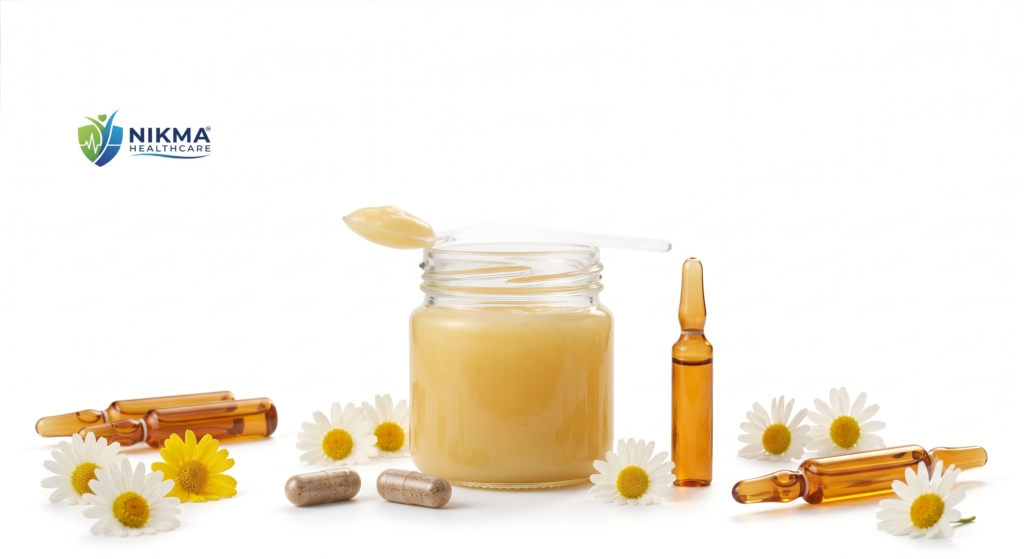
Royal jelly is comprised of water, carbs, protein and fat (1). The full chemical makeup of royal jelly is unknown, but its positive effects on health are thought to stem from its unique proteins and fatty acids (1, 2Trusted Source).
- These include nine glycoproteins collectively known as major royal jelly proteins (MRJPs) and two fatty acids, trans-10-Hydroxy-2-decenoic acid and 10-Hydroxydecanoic acid (2Trusted Source).
- Royal jelly also contains several B vitamins and trace minerals.
- However, nutrient composition varies considerably between sources of royal jelly (1).
Some of the vitamins typically present in royal jelly include:
Thiamine (B1), Riboflavin (B2), Pantothenic acid (B5), Pyridoxine (B6), Niacin (B3), Folic acid (B9), Inositol (B8) & Bioti (B7)
These nutrients may provide some of royal jelly’s potential health benefits, though more research on this unique substance is needed.
May Provide Antioxidant and Anti-Inflammatory Effects
Royal jelly is widely claimed to reduce inflammation and oxidative stress. In multiple test-tube and animal studies, specific amino acids, fatty acids and phenolic compounds found in royal jelly appear to have potent antioxidant effects (3Trusted Source).
- Additionally, several test-tube studies show reduced levels of pro-inflammatory chemicals released from immune cells treated with royal jelly (4Trusted Source, 5Trusted Source, 6Trusted Source).
- While these results are promising, human studies are lacking. More data is needed to draw any definitive conclusions on treating inflammation with royal jelly.
May Reduce Heart Disease Risk, Cholesterol Support
Both animal and human studies demonstrate that royal jelly may positively impact cholesterol levels and thereby reduce heart disease risk. Though the exact mechanism remains unclear, specific proteins in royal jelly may help lower cholesterol (7Trusted Source).
- One 12-week study found that rabbits supplemented with royal jelly significantly reduced their total and “bad” LDL cholesterol levels by 28% and 23%, respectively (8Trusted Source).
- Similarly, a one-month human study saw an 11% and 4% reduction in total and “bad” LDL cholesterol levels in people taking about 3 grams of royal jelly daily (9Trusted Source).
- Conversely, another small human study determined no significant differences in cholesterol levels between participants treated with royal jelly and those on a placebo (10Trusted Source).
While these studies are promising, more research is needed to better understand royal jelly’s impact on heart health.
May Aid Wound Healing and Skin Repair
Royal jelly — both used orally and topically — may support wound healing and other inflammatory skin conditions. It’s known to have an antibacterial effect, which can keep wounds clean and free from infection (11Trusted Source).
- One animal study revealed an increase in collagen production in rats given royal jelly extract. Collagen is a structural protein vital for skin repair (12Trusted Source).
- A test-tube study showed significantly enhanced tissue repair capacity in human cells treated with royal jelly (13Trusted Source).
- Conversely, a more recent human study did not notice any difference in wound healing between a control group and participants treating diabetic foot ulcers topically with royal jelly (14Trusted Source).
Ultimately, more research is needed on royal jelly’s effects on wound healing and tissue repair.
Specific Proteins May Lower Blood Pressure
Royal jelly may protect your heart and circulatory system by reducing blood pressure. Several test-tube studies indicate that specific proteins in royal jelly relax smooth muscle cells in your veins and arteries, thereby lowering blood pressure (15Trusted Source).
A recent animal study examined a supplement combining royal jelly with other bee-derived substances and found a significant reduction in blood pressure. However, the exact role royal jelly played in this supplement is unclear (16Trusted Source).
More research is needed to understand royal jelly’s relationship with blood pressure.
Regulates Blood Sugar by Reducing Oxidative Stress and Inflammation
Royal jelly may also improve blood sugar control and insulin sensitivity by reducing oxidative stress and inflammation.
- Multiple animal studies showed increased insulin sensitivity and an apparent protective effect on pancreatic, liver and reproductive tissue in obese, diabetic rats treated with royal jelly (17Trusted Source, 18Trusted Source, 19Trusted Source).
- One small six-month human study demonstrated a 20% reduction in fasting blood sugar in healthy people who supplemented daily with royal jelly (10Trusted Source).
However, research on this topic is limited.
Antioxidant Properties May Support Healthy Brain Function
Royal jelly may boost brain function. One study revealed that stress-induced mice treated with royal jelly had lower levels of stress hormones and a more robust central nervous system than the control group (20Trusted Source).
- A separate study resulted in improved memory and reduced symptoms of depression in postmenopausal rats given royal jelly (21Trusted Source).
- Another animal study showed that rats treated with royal jelly were better able to remove certain chemical deposits in the brain associated with Alzheimer’s disease (8Trusted Source).
- Most of these studies attribute the protective effect on brain and nervous tissue to royal jelly’s antioxidant capacity.
Though this data is encouraging, human research is needed.
May Increase Tear Secretion And Treat Chronic Dry Eyes
Royal jelly may treat dry eyes when taken orally. One animal and one small human study showed improvements in chronic dry eyes for those treated orally with royal jelly. The results indicate that this bee-derived substance may increase tear secretion from lacrimal glands within your eyes (22Trusted Source, 23Trusted Source).
- No adverse effects were reported from the human study. Thus, royal jelly could serve as a low-risk solution for chronic dry eyes.
- Keep in mind that this very small data sample doesn’t indicate that royal jelly is able to treat most people’s dry eyes.
Ultimately, more research is needed.
May Provide Anti-Aging Effects Through Various Means
Royal jelly may slow the aging process in several ways. A few studies show increased lifespan and improved cognitive performance in rats treated orally with royal jelly (24Trusted Source).
- Royal jelly is sometimes included in topical skin care products to support maintenance of healthy, younger-looking skin.
- Animal research indicates that royal jelly may support increased collagen production and protection from skin damage associated with UV radiation exposure (12Trusted Source, 25Trusted Source).
- Since human research on the anti-aging benefits of oral or topical royal jelly use is insufficient, more studies are needed.
Maca Root
Maca Root: Health Benefits and Potential Uses
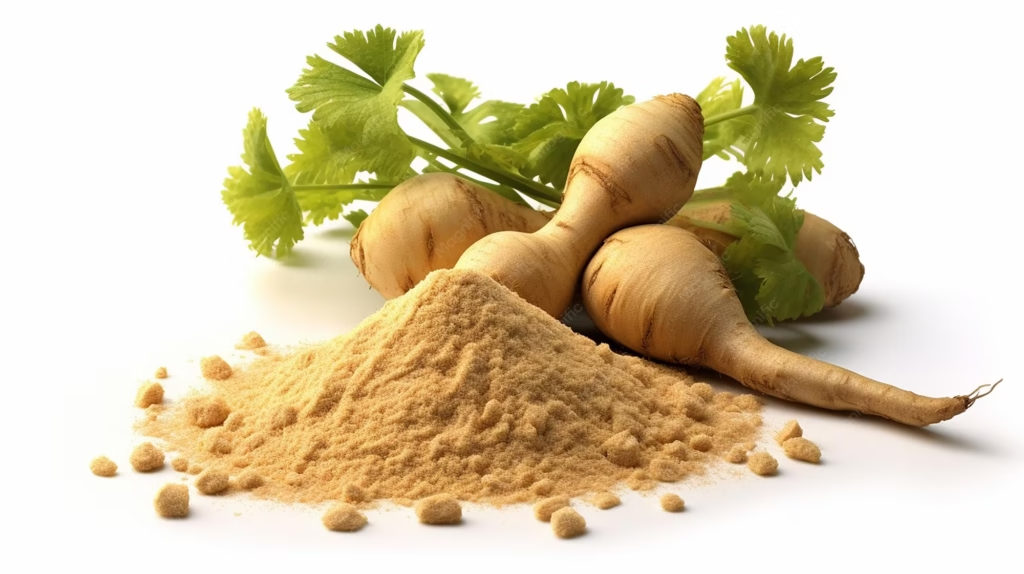
Maca is a plant native to Peru. Its root is a natural remedy for some people to treat specific health issues, including infertility and low sex drive. However, more research is needed.
- Maca is a plant that some populations in Peru have used for thousands of years as food and medicinally.
- In the last few decades, maca has grown in popularity. This article explains what maca root is, highlights some potential benefits, and answers whether it’s safe to add to your diet
What does maca root do for the body?
The maca plant, called Lepidium meyenii or “Peruvian ginseng,” is a cruciferous vegetable related to broccoli, cauliflower, cabbage, and kale.
Native to the high Andean plateaus, it has been cultivated for over 2,000 years and can survive the harsh weather of the Peruvian Andes. Traditionally, the Andean people used maca as food or medication to treat respiratory conditions and rheumatic disease.
Maca products have increased in popularity due to claims they may help increase libido and fertility. Maca is now grown worldwide, including in China.
It contains beneficial compounds, including:
- fiber
- vitamins and minerals
- bioactive compounds, such as macamides, macaridine, alkaloids, and glucosinolates
However, research on its benefits has been mixed, with more studies needed to support the claims.
Maca may help with sexual health
It’s still unclear whether maca has any real benefit for treating low libido, sexual dysfunction, or infertility in either males or females. The available studies have shown mixed results.
Are sex and gender the same thing?
People often use the terms sex and gender interchangeably, but they have different meanings:
- “Sex” refers to the physical characteristics that differentiate male, female, and intersex bodies.
- “Gender” refers to a person’s identity and how they feel inside. Examples include man, woman, nonbinary, agender, bigender, genderfluid, pangender, and trans. A person’s gender identity may be different from the sex they were assigned at birth.
What does maca do for male sexual function?
While research is limited, this older 2002 studyTrusted Source suggests that maca root may benefit males with low sexual desire or libido.
Similarly, a 2008 study found that supplementing with 3 grams of maca improved sexual function. That included benefiting libido in men being treated with antidepressants.
A 2020 study suggests that taking 2 grams (g) of maca per day for 12 weeks may significantly improveTrusted Source sperm concentration in males with low sperm count, compared with a placebo. However, they didn’t find a significant difference in sperm motility between the treatment and placebo groups.
Further research is needed to confirm these results.
What does maca root do for a female sexual function?
One older 2015 studyTrusted Source of 45 females with antidepressant-induced sexual dysfunction also found that taking 3 grams of maca root per day for 12 weeks resulted in higher remission rates, compared with a placebo. This was only observed in post-menopausal women.
However, larger studies in humans are still needed to investigate the effects of maca on female libido and sexual function.
Maca may help relieve symptoms of menopause
Menopause happens naturally in people who menstruate. It’s the time of life when menstrual periods stop permanently.
ResearchTrusted Source suggests that maca may benefit people going through menopause by helping to relieve some symptoms, including hot flashes and interrupted sleep.
More research is needed.
Maca may improve mood and energy
Limited evidence suggests that maca may help improve energy levels and enhance mood.
A 2021 studyTrusted Source in mice found maca helped regulate exercise-induced fatigue. Another 2022 study in mice reached a similar conclusion.
A 2022 study in young adult females also showed that maca extract might reduce fatigue. Meanwhile, a 2016 study of 175 people living at either low or high altitudes demonstrated that taking 3 g of red or black maca daily for 12 weeks improved mood and energy scores compared with a placebo.
However, there is not enough evidence yet to draw firm conclusions about maca’s impact on energy or mood.
Other potential health benefits of maca
Human research investigating the potential health benefits of maca is limited.
However, initial findings from test tube studies and animal studies in mice and rats suggest maca may benefit health by:
- helping preserveTrusted Source cognitive function
- supportingTrusted Source treatment of benign prostatic hyperplasia (BPH)
- helpingTrusted Source wound healing
- containingTrusted Source anti-inflammatory properties
- containing prebiotics that may support digestion
Keep in mind that there’s currently no evidence that these potential benefits apply to humans, so research on humans would be needed to investigate them.
Gensing
Contains antioxidants that may reduce inflammation
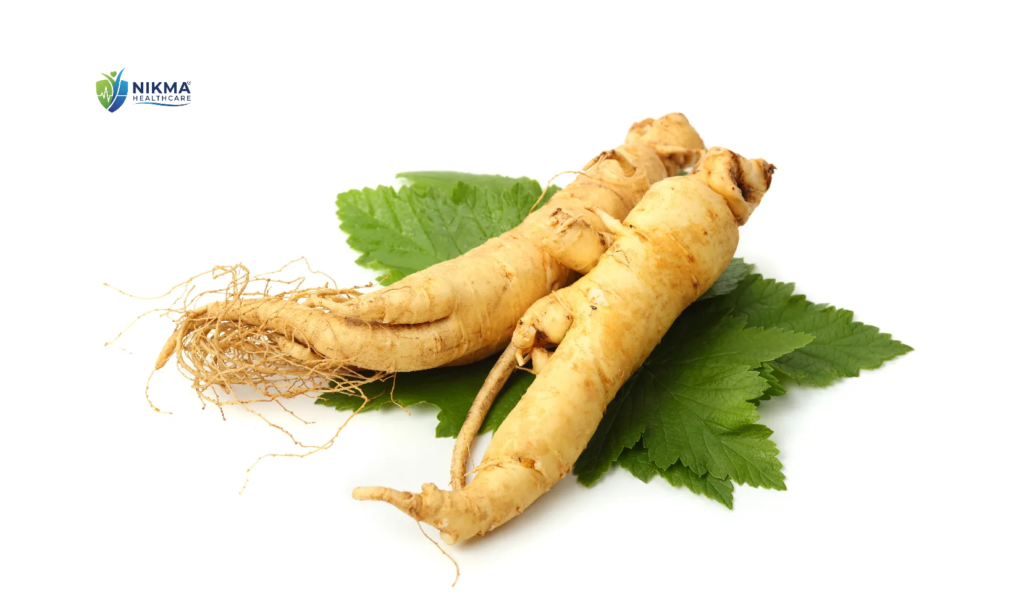
Ginseng has beneficial antioxidant and anti-inflammatory properties.
A 2022 studyTrusted Source in 12 physically active males found that short-term supplementation with American ginseng extract reduced exercise-induced muscle damage and decreased markers of inflammation compared with a placebo.
Another 2022 studyTrusted Source in mice also suggests that ginseng root extract could help reduce inflammation, though more research is necessary.
Learn about over-the-counter anti-inflammatories.
May benefit brain function
Ginseng could helpTrusted Source improve brain functions like memory, behavior, and mood.
A 2018 studyTrusted Source of 6,422 older adults found that regular consumption of ginseng for at least 5 years was associated with improved cognitive function later in life.
According to a 2017 reviewTrusted Source, ginseng could also help ease stress and may offer benefits for depression and anxiety.
A small Trusted Source2015 studyTrusted Source showed that taking 200 milligrams (mg) of American ginseng significantly improved working memory after 3 hours compared with a placebo.
A 2018 reviewTrusted Source explains that ginseng can have a positive effect on brain function in people with Alzheimer’s disease.
Could improve erectile dysfunction
- A 2021 studyTrusted Source suggests that ginseng may be a useful alternative for the treatment of erectile dysfunction (ED).
- A 2022 studyTrusted Source shows that ginseng may promote the production of nitric oxide, a compound that improves muscle relaxation in the penis and increases blood circulation.
- A 2021 reviewTrusted Source suggests that nitric oxide may play a role in erectile dysfunction.
- Still, research on the effects of ginseng on ED has turned up mixed results, and more high quality studies are needed.
- A 2021 reviewTrusted Source of nine studies found that ginseng could improve self-reported ability to have intercourse in men.
- However, researchers also noted that ginseng had little to no effect on ED or satisfaction with intercourse compared with a placebo.
Learn more about treatments for ED.
May boost the immune system
- According to a 2020 reviewTrusted Source, ginseng possesses potent antibacterial, antifungal, and antiviral properties. It may enhance the function of the immune system.
- Interestingly, a 2018 animal studyTrusted Source found that black red ginseng extract (BRGE) increased the number of immune cells and enhanced antioxidant levels in the liver.
- Similarly, a 2020 studyTrusted Source of 100 people showed that taking 2 grams (g) of Korean red ginseng per day for 8 weeks significantly increased levels of immune cells compared with a placebo.
However, more studies in humans are necessary to understand the potential effects of ginseng on immune function.
May have potential benefits against cancer
One older 2015 studyTrusted Source of 45 females with antidepressant-induced sexual dysfunction also found that taking 3 grams of maca root per day for 12 weeks resulted in higher remission rates, compared with a placebo. This was only observed in post-menopausal women.
However, larger studies in humans are still needed to investigate the effects of maca on female libido and sexual function.
Maca may help relieve symptoms of menopause
Menopause happens naturally in people who menstruate. It’s the time of life when menstrual periods stop permanently.
ResearchTrusted Source suggests that maca may benefit people going through menopause by helping to relieve some symptoms, including hot flashes and interrupted sleep.
More research is needed.
Maca may improve mood and energy
Limited evidence suggests that maca may help improve energy levels and enhance mood.
A 2021 studyTrusted Source in mice found maca helped regulate exercise-induced fatigue. Another 2022 study in mice reached a similar conclusion.
A 2022 study in young adult females also showed that maca extract might reduce fatigue. Meanwhile, a 2016 study of 175 people living at either low or high altitudes demonstrated that taking 3 g of red or black maca daily for 12 weeks improved mood and energy scores compared with a placebo.
However, there is not enough evidence yet to draw firm conclusions about maca’s impact on energy or mood.
Other potential health benefits of maca
Human research investigating the potential health benefits of maca is limited.
However, initial findings from test tube studies and animal studies in mice and rats suggest maca may benefit health by:
- helping preserveTrusted Source cognitive function
- supportingTrusted Source treatment of benign prostatic hyperplasia (BPH)
- helpingTrusted Source wound healing
- containingTrusted Source anti-inflammatory properties
- containing prebiotics that may support digestion
Keep in mind that there’s currently no evidence that these potential benefits apply to humans, so research on humans would be needed to investigate them.